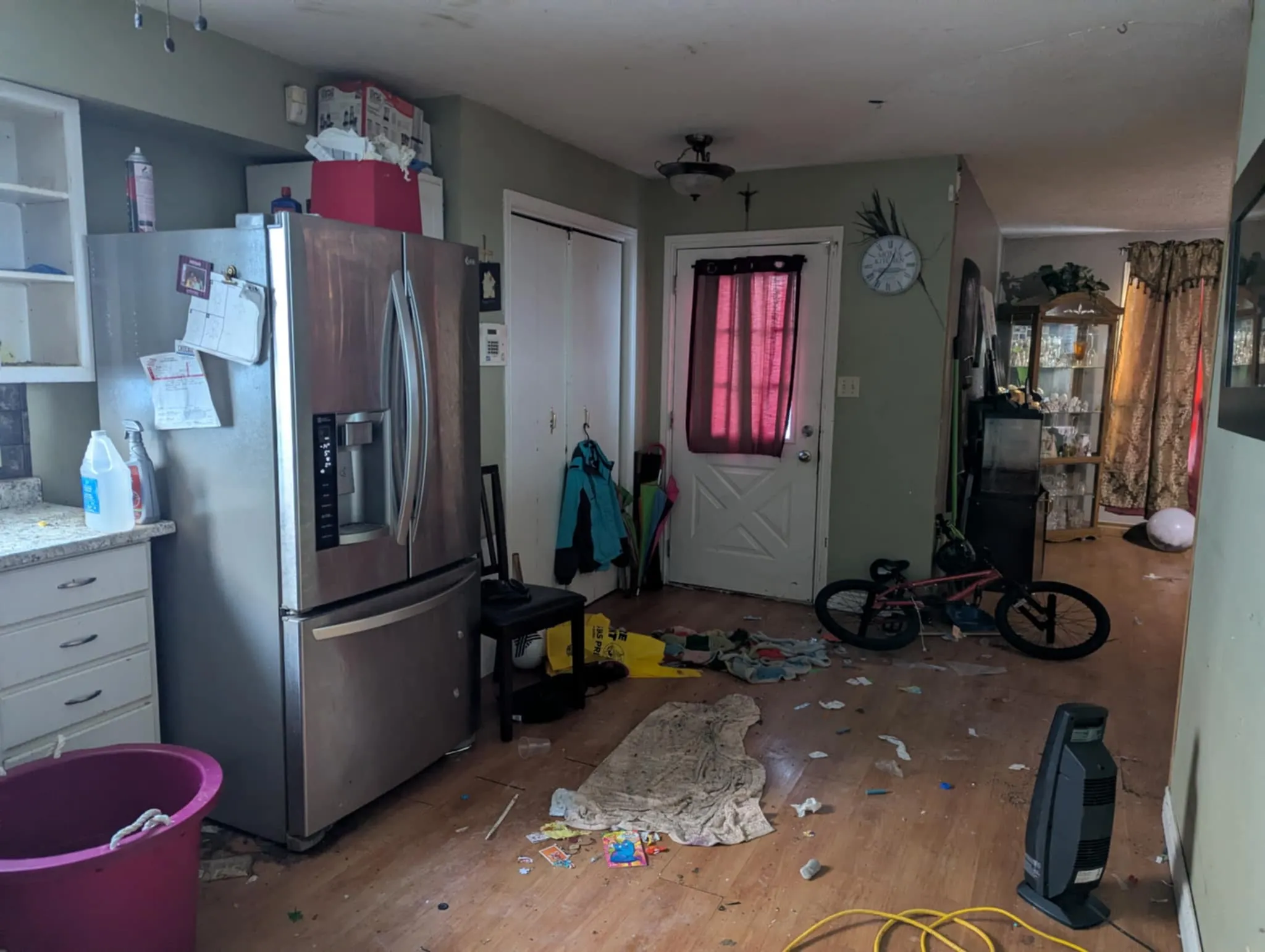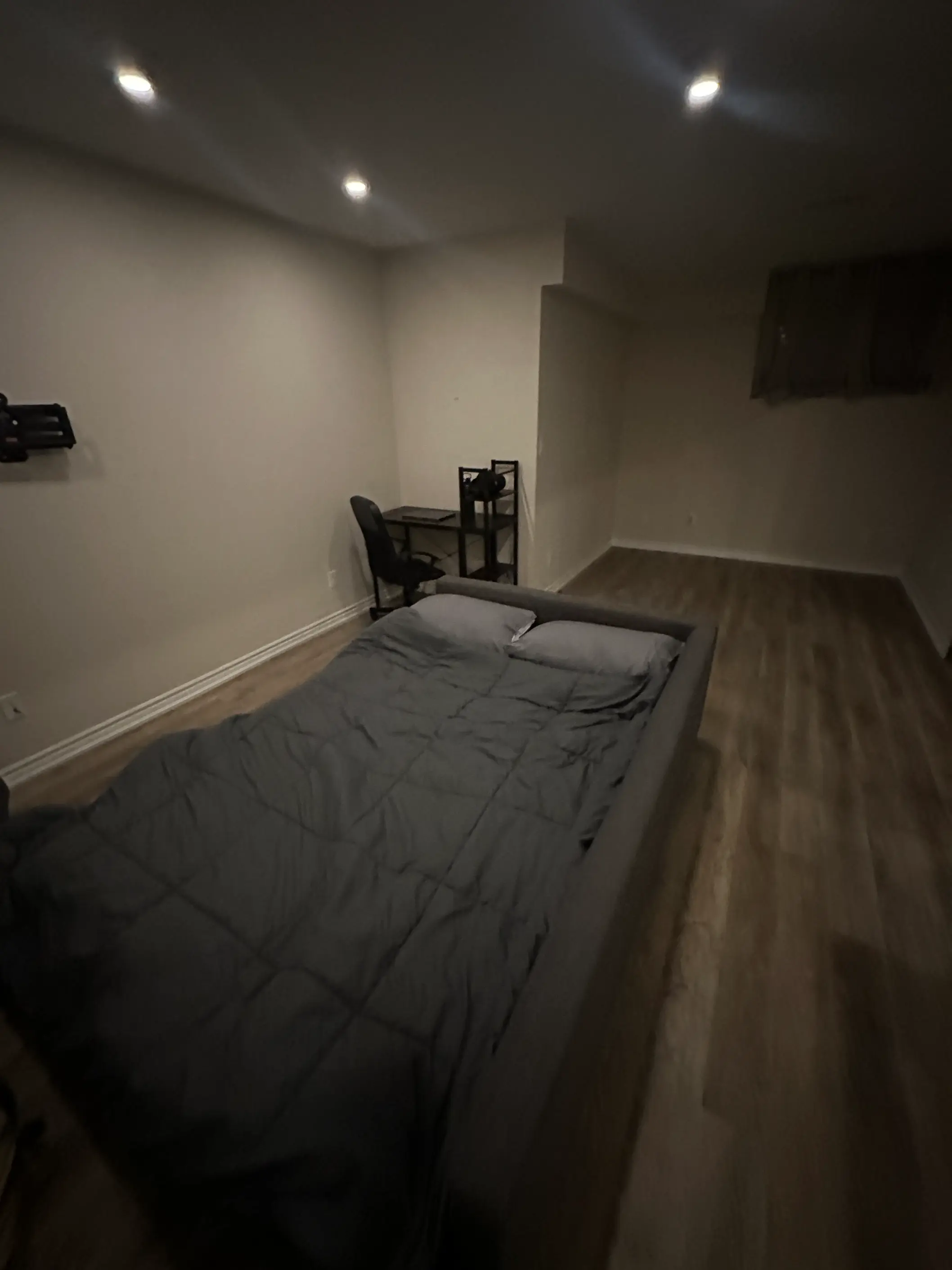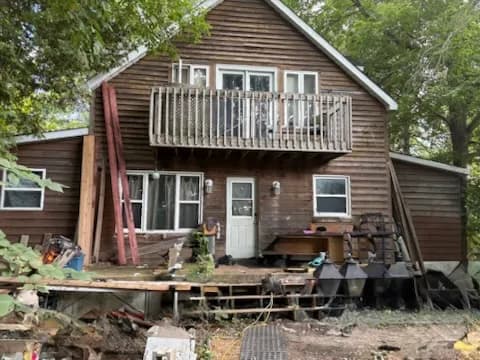
A finished basement in an East York semi. Hardwood went down two summers ago. The seller knows the back wall behind the entertainment unit sometimes weeps after a long heavy rain. The buyer's inspector knows it too — the efflorescence ring on the cinder block tells the story.
Financing falls through within 72 hours of the inspection report. So does the deal.
That's the Ontario water-intrusion failure pattern, repeated thousands of times a year across the GTA, southwestern Ontario, and the older inner-city neighbourhoods of Toronto and Hamilton. Here's why it keeps happening and what the practical exits look like.
Why Ontario basements take on water
A few overlapping causes, depending on era, soil, and location.
Toronto and the GTA sit on a mix of clay and till. Clay swells when wet and shrinks when dry, cracking foundations through the cycle. Add freeze-thaw and the cracks grow.
Older homes across Toronto, Hamilton, and southern Ontario built before about 1940 often have stone or rubble foundations with parge coatings. Once the parge fails — and a hundred years of weather usually does the job — water seeps through. Repair on a stone foundation is more invasive and more expensive than on poured concrete.
Weeping tile clogs or collapses with age. Homes built before the late 1970s often have clay tile rather than modern plastic. Tree roots find the seams and grow into them. Within a decade or two, the drainage stops working.
Surface grading shifts with settling. Downspouts disconnect from the underground drains they were meant to feed. Window wells fill during heavy rain. Sump pumps fail, often during the very storm when they're needed most.
Each thing on its own is fixable. Multiple together, or one neglected for years, becomes "this basement has a history" — which is what an inspector eventually writes.
The SPIS form (when it exists)
Ontario has the Seller Property Information Statement, a standardized OREA form sellers can complete to disclose known property conditions. It's optional. Some sellers fill it out, some don't.
When a SPIS exists and the seller indicated "no known water issues," and a post-sale lawsuit later proves the seller did know — the SPIS becomes evidence against them. When no SPIS exists, the buyer's case relies on common-law latent-defect doctrine, which is harder to prove but still available.
The practical asymmetry: a truthful SPIS protects against post-sale liability but kills financing during the listing. A non-existent SPIS protects financing but raises common-law exposure later. Most sellers in this position end up choosing the listing path that hides the problem and accepting the litigation risk — which sometimes costs more than the original repair would have.
What inspectors and lenders actually see
The visible tells: efflorescence (white mineral stains on basement walls), water staining at the base of drywall, swollen baseboards, peeling paint at the wall-floor joint, musty smell. Plus the patch jobs: freshly painted-over efflorescence rings, new baseboard caps in a basement that's otherwise twenty years old, faintly visible water-line stains that someone tried to drywall over.
Inspectors are trained to find the patches. They land in the report.
Buyer's lender sends an appraiser. If the appraisal notes water history, the loan-to-value calculation shifts down and the lender either re-prices or pulls financing.
Insurance is a parallel problem. Standard Ontario home policies cover sudden and accidental water damage. They generally exclude chronic seepage. Sewer backup is a rider, separately priced. Overland flood is an endorsement on top of that.
When financing and insurance both stall, the deal dies in the conditional period — exactly the file pattern our MLS-failed page was built around.
The caveat emptor side, with Ontario flavour
Ontario is caveat emptor at common law. The duty to disclose applies to latent defects — hidden defects that would render the property dangerous or uninhabitable, that the seller knows about, and that the buyer couldn't reasonably discover on inspection.
Chronic basement water is the textbook latent defect. Hidden behind drywall, hidden during a dry inspection, but known to the seller and material to the buyer's purchase decision. Ontario courts have held sellers liable for concealing water history in multiple reported cases over the decades.
The remedy when it comes is expensive: rescission of the sale (rare), damages to repair the defect (common), or in egregious cases, punitive damages. The litigation itself runs 18 to 36 months and lawyer fees can exceed the original repair cost.
Disclose honestly on the SPIS or in writing and lose the financing route on MLS. Don't disclose and accept the litigation risk later. A direct cash sale closes the loop — the buyer takes the property as-is with explicit acknowledgment of the water history, and the seller exits clean.
What remediation actually runs in Ontario
Ballpark numbers from the Ontario market:
Exterior excavation, foundation waterproofing membrane, weeping tile replacement on a typical residential foundation: $15,000 to $35,000+ in the GTA, somewhat less in smaller-market Ontario.
Interior membrane systems and interior weeping tile: $8,000 to $18,000+ depending on basement size and access.
Sump pump installation or replacement: $1,500 to $5,000.
Stone foundation re-parging and waterproofing on a pre-1940 Toronto semi: $20,000 to $50,000+. Specialty work, fewer contractors who handle it.
Grading and downspout extensions: a few hundred to a few thousand.
Worked example: a Toronto semi with chronic basement water needing $25,000 of foundation work might list at $1.05M, take an offer at $980K conditional, finalize at $920K after inspection negotiation. After commission, four months of carrying cost, and the negotiated credit, net to the seller can land near $850K. A direct cash offer at $880K to $900K closing in 7 to 15 days, with the water risk transferred, frequently nets more. (Illustrative — actual offers depend on the property and current market.)
When a direct sale wins on the math
Owners who fix it first and then list are the ones with cash and time. Everyone else — owners under financial pressure, out-of-province executors, sellers carrying two properties because they already bought somewhere else — usually finds the listing path extracts more in lost time and price erosion than the cash discount would have.
This is the file pattern the major-repairs page handles, and the MLS-failed page covers the post-collapse pivot.
For Toronto sellers specifically, our Toronto market page covers the city-level dynamics. For the rest of the province, the Ontario hub covers every market.
What this isn't
Not legal, financial, or insurance advice. Coverage decisions, remediation needs, and disclosure obligations all depend on your specific property and your specific policy. Talk to a basement waterproofing contractor for a real scope, your insurance broker about your coverage history, and a real estate lawyer before signing on a property with known water history.
Getting a number
If your Ontario basement has a water history and you'd rather not spend the next six months on a listing that may not close, submit the property and you'll have a written cash offer back within 24 hours. The major-repairs page covers the as-is closing mechanics, and the Ontario hub covers every market we buy in.