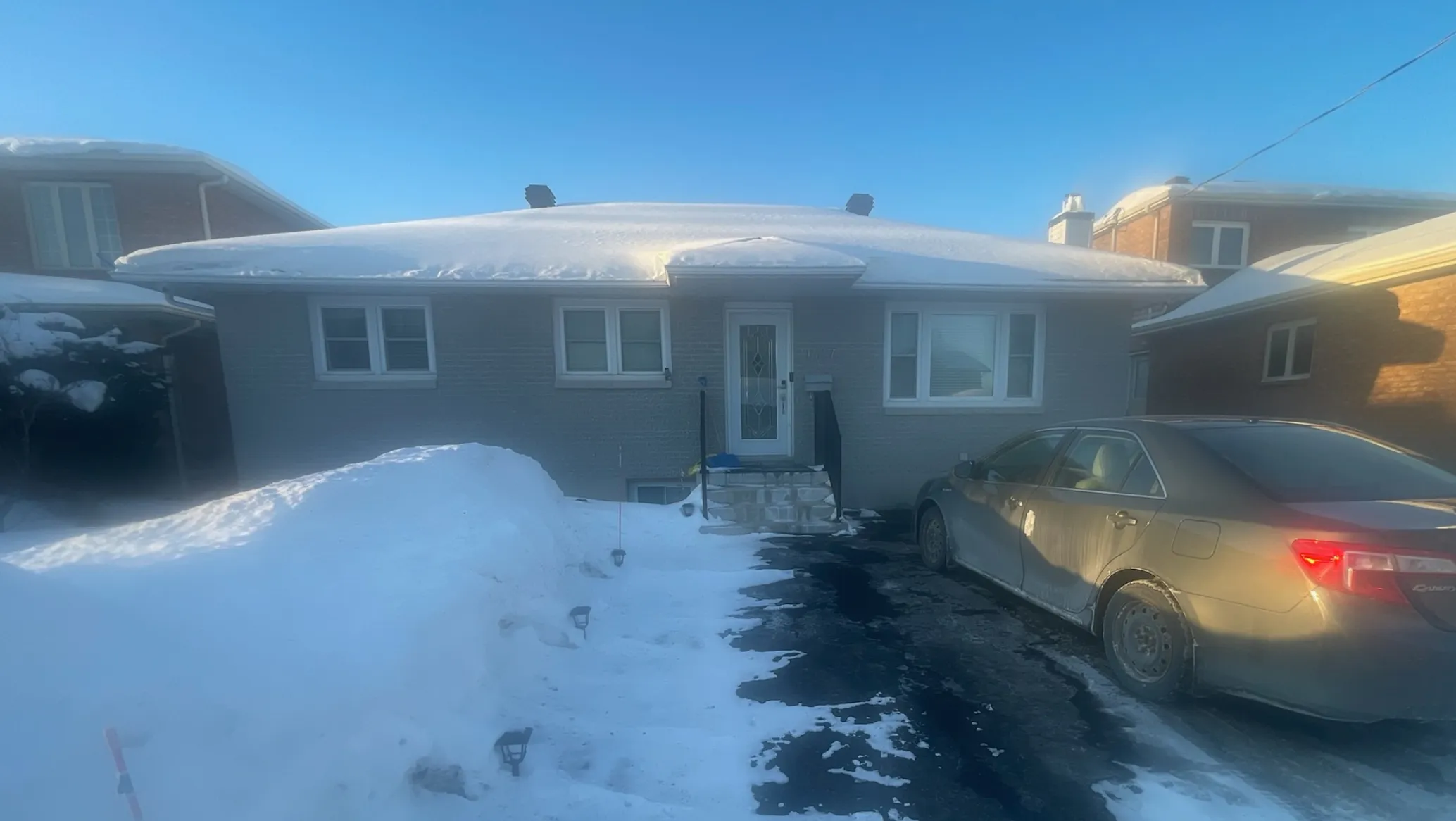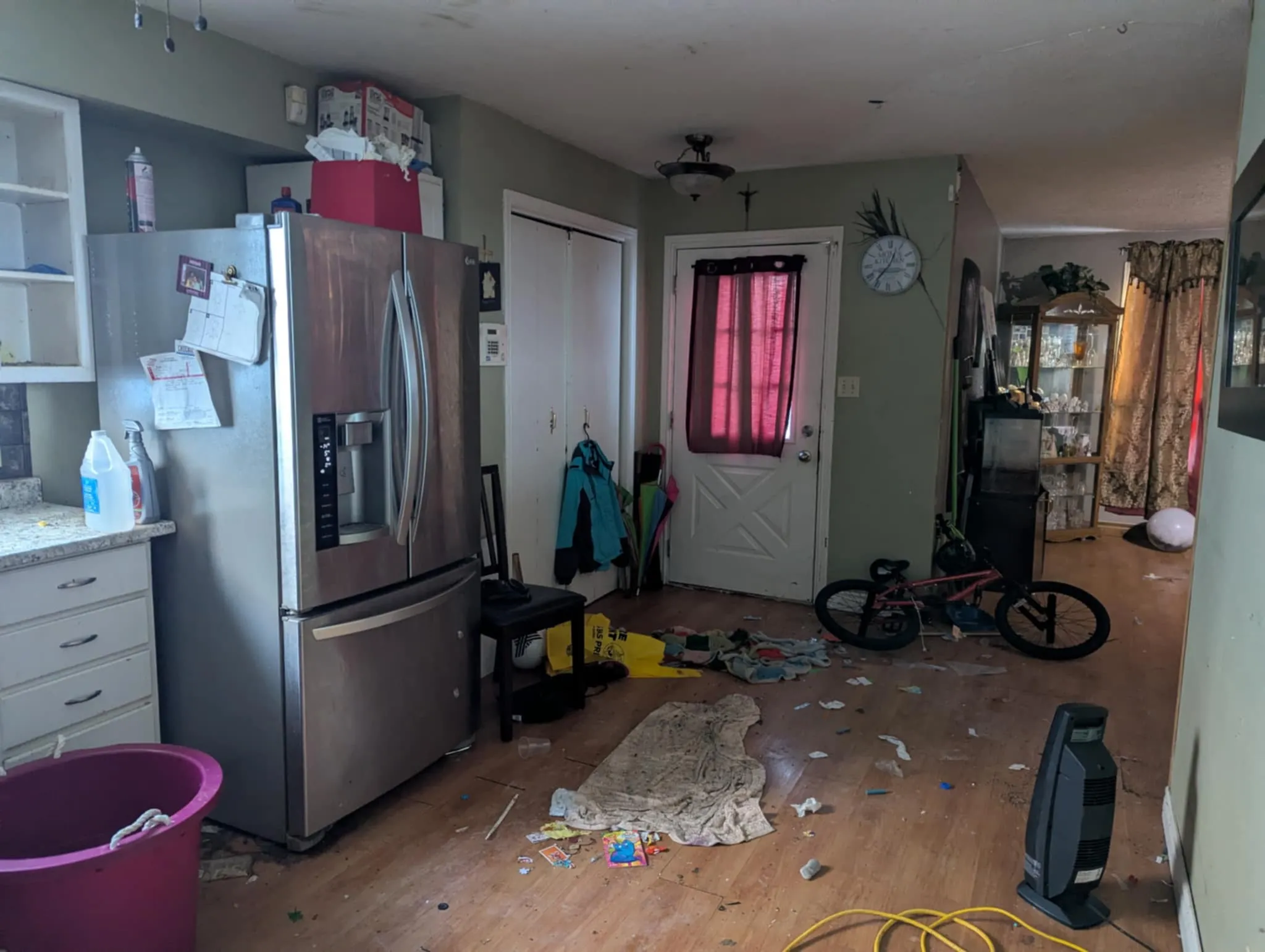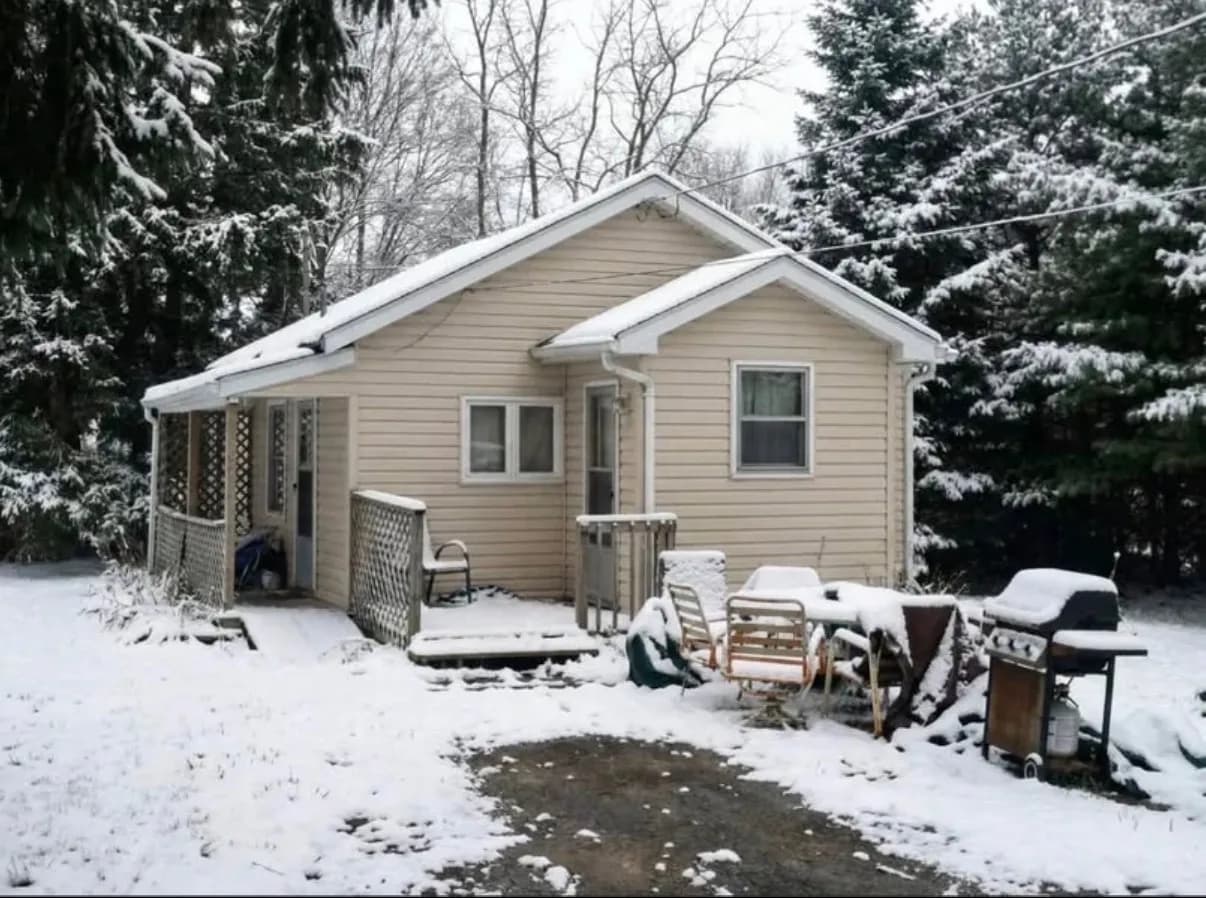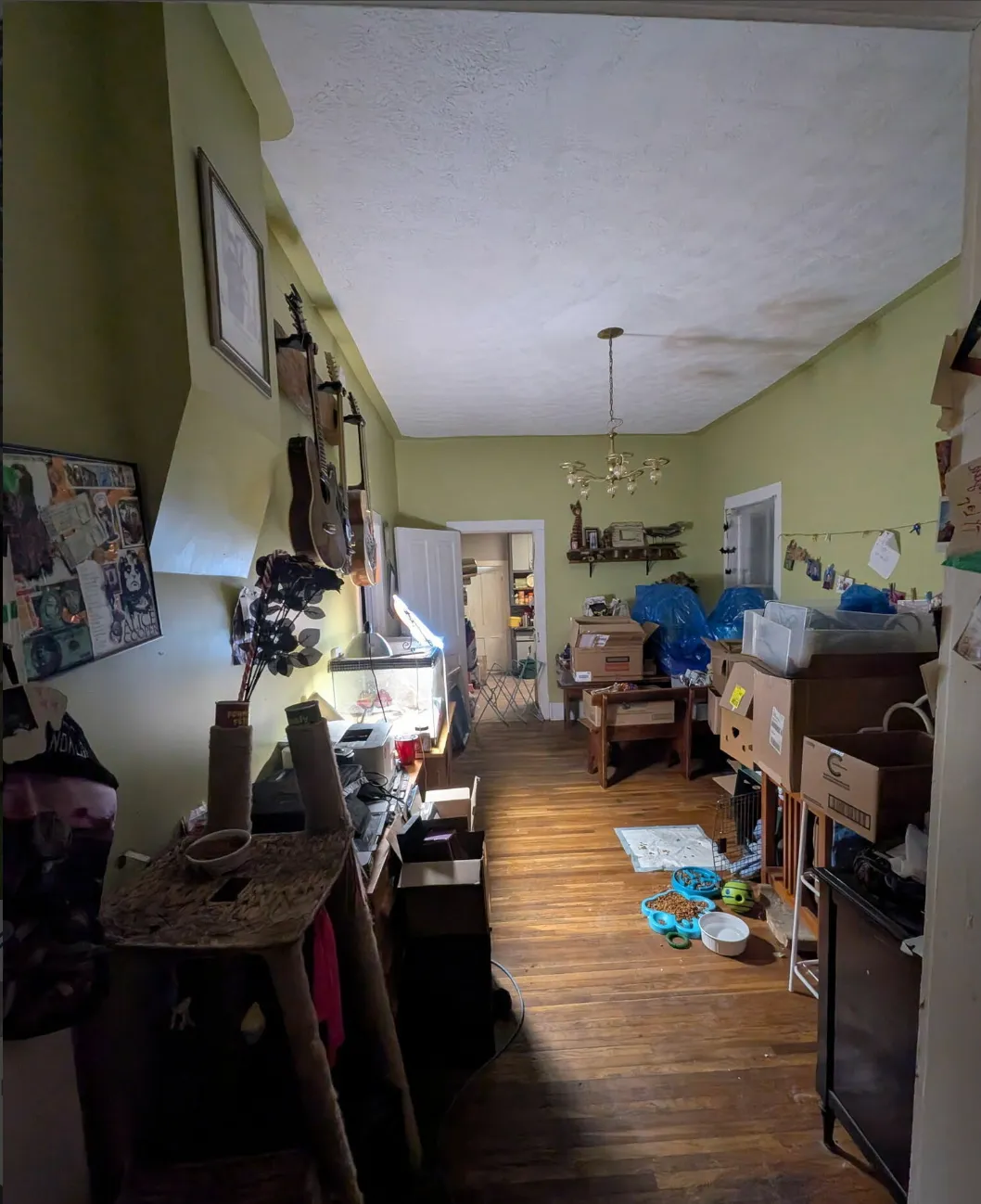
A home in west Edmonton or northwest Calgary that needs eighty thousand dollars of work — foundation repair, a new roof, knob-and-tube rewiring — looks impossible from the outside. The math on selling it through a listing is genuinely bad: every reasonable buyer needs financing, and most lenders won't fund a deal on a property with a structural or systems issue. Every reasonable buyer also wants insurance, and most insurers won't write a policy on a home with active mold, polybutylene plumbing, or fire damage until those are remediated. The deal collapses in the conditional period, and the file goes back to the start.
That's the practical reality of selling a major-repairs home in Alberta. It's not that no one will buy it — it's that the people who would buy it through a brokerage listing can't get financing or insurance to close, and the people who can close (cash buyers) typically bid well below what the home would be worth if it weren't broken. What's actually going on below — and how the math sometimes lines up better through a direct private sale than through the traditional listing route.
What Counts as "Major" in This Conversation
When the trade calls a repair "major," it usually means one of two things: a problem an inspector will flag in red, or a problem a lender or insurer will refuse to write against. The most common in Alberta files:
- Foundation movement — cracks, heaving from clay soils (common across older Edmonton and Calgary neighbourhoods), pier or post-tension issues in slab-on-grade builds. A bank appraiser flagging structural concerns is usually a hard "no" from the lender.
- Failing roof — multiple active leaks, sheathing rot, or end-of-life shingles where re-roofing exceeds what the buyer has budgeted. Marginal on its own, major when paired with water damage to interior framing.
- Mold — extensive, in framing, drywall, or HVAC. Insurers will exclude or refuse to bind. Remediation runs into five figures fast.
- Knob-and-tube wiring — original electrical in homes built before about 1950. Many Alberta insurers refuse to write a policy on a property with active knob-and-tube; some allow it with a rewire commitment. Without insurance, the buyer can't fund.
- Polybutylene plumbing — grey plastic supply pipe installed roughly 1978 through 1995, including in many late-1970s and 1980s Edmonton, Calgary, and Red Deer builds. Catastrophic failure rate is well-documented. Most insurers will not write coverage; most lenders won't fund.
- Fire damage — even partial, even fully framed-in. Lenders won't fund a property with open fire damage; insurers won't bind it. The file is effectively cash-only until restored.
Any one of these knocks the home out of the standard mortgage-and-insurance lane that most listing buyers run on. Two or three of them together make the property functionally unsellable through MLS unless the seller has the cash to remediate first.
Why MLS Often Doesn't Work for These Files
The listing process assumes the buyer can get financing and insurance. When the buyer can't, the deal collapses — and the most common failure pattern is during the conditional period:
- Buyer makes a conditional offer (financing + inspection).
- Buyer's inspector finds the major issue (or surfaces something the seller hadn't disclosed).
- Buyer's lender's appraiser reflects the issue in the appraisal — value drops, the lender's loan-to-value ratio breaks, lender pulls financing.
- Buyer's insurer refuses to bind without remediation.
- Buyer walks. Deal dies. The house goes back on market, now flagged as having "failed an inspection."
The downstream effect is days-on-market grows, asking price falls, and the eventual buyer is often a cash investor anyway — but one who's been waiting for the price to drop. That's how a $400,000 home that needs $80,000 in work ends up selling for $290,000 after four months on the market and two collapsed deals. The cash buyer at the end was always there. The seller just ate the carrying costs and the price erosion getting to them.
For sellers who don't have the cash to fix the issues first — which is most of these files — a direct private sale skips the failure pattern altogether. No financing condition. No inspection condition. As-is. Close in 7 to 15 days through a licensed Alberta real estate lawyer.
This is the file pattern our major-repairs page is built around, and a frequent end-state for properties that began on an MLS listing that didn't close.
Alberta's Disclosure Rules — Caveat Emptor With a Caveat
A key piece sellers often misunderstand: Alberta is a caveat emptor jurisdiction. "Buyer beware." Sellers are generally not statutorily required to fill out a Property Disclosure Statement, and there's no Alberta equivalent of the British Columbia mandatory disclosure regime. The PDS form circulating in Alberta is optional — the seller's choice to provide it or not.
What the seller does owe, under long-standing Canadian common law: the duty to disclose latent defects. A latent defect is a hidden defect that the buyer couldn't reasonably discover through a competent inspection, and that either renders the property dangerous, uninhabitable, or that the seller actively knows about and conceals. A patent defect — one visible or discoverable on inspection — does not have to be volunteered. The buyer's inspector is expected to catch those.
In practice: a visible foundation crack is a patent defect. A history of basement flooding the seller knows about but hides is a latent defect. Disclosing latent defects honestly is what protects the seller from a post-sale lawsuit. Filling out the optional PDS truthfully is the safest path when the seller chooses to provide one. Filling it out falsely is materially worse than not providing one at all — the false statement creates a claim path the silence wouldn't.
The asymmetry is real: disclosing a major problem on a listing typically kills the financing route, because the buyer's lender and insurer now have written confirmation of the issue. Not disclosing exposes the seller to a lawsuit later. A direct private cash sale, where the buyer takes the property explicitly as-is and acknowledges the condition in the agreement, removes that bind — the buyer's offer is built around the condition rather than around the assumption it'll be fixed.
The Foreclosure Adjacency
A homeowner with major repairs and mortgage difficulty has a compounding problem. The repairs make the house hard to sell quickly. The arrears put the lender on a timeline.
In Alberta, the lender's path is judicial foreclosure under the Law of Property Act, RSA 2000, c. L-7, run through the Court of King's Bench: Statement of Claim → Order Nisi (with a court-set redemption period, usually 30 to 60 days) → Order for Sale. The whole proceeding typically runs 6 to 12 months from filing to sale, sometimes longer. That's more runway than Ontario's power of sale, but it's still a clock.
A direct cash sale closing through a licensed Alberta real estate lawyer in 7 to 15 days can pay out the mortgage and end the proceeding before Order for Sale issues. The window stays open until the court sale completes. We walk through that mechanic in detail on the foreclosure page, and the behind-on-mortgage page covers the earlier stage, before a Statement of Claim is even filed.
The Honest Math
Selling as-is to a cash buyer usually means a lower headline number than the post-renovation comparable sale. That's the trade. The honest comparison isn't to "what this house would be worth if it were fixed" — it's to "what we'd net through a listing, after the repair cost we'd have to either do or discount for, the holding costs while the deal restarts twice, and the eventual sale to a cash buyer at the end of that road."
Worked simply: a home with a $400,000 comparable in fixed condition that needs $80,000 in real repairs might list at $360,000 and eventually sell at $290,000 after four months. The net to the seller, after commission, four months of mortgage payments, utilities, property tax, and any further price erosion, can easily be under $270,000. A direct cash offer at $295,000 to $310,000, closing in two weeks with no condition, often nets the seller more once the carrying costs are honest. (These are illustrative — actual offers depend on the specific repair scope, neighbourhood, and current local market.)
This is the math that drives most major-repair sales onto the direct route. It's not that cash buyers pay more in absolute terms — they don't. It's that the alternative path eats most of its own delta before the seller sees a cheque.
Edmonton, Calgary, Red Deer
The major-repair file pattern is heaviest in the older housing supply of each Alberta market — the inner-city neighbourhoods built before insurance, financing, and code converged on what they look like today.
- Edmonton: postwar bungalows through 1970s and 1980s splits in Riverdale, Cromdale, Strathcona, and pockets of the west end. Knob-and-tube, polybutylene, and foundation movement on river-valley clay are the recurring three.
- Calgary: Bridgeland, Inglewood, Crescent Heights, and parts of Mount Pleasant — older heritage homes where the systems are a generation or more behind. Similar pattern to Edmonton plus more sloped-lot foundation issues.
- Red Deer: 1960s and 1970s ranchers across the older subdivisions. Mid-market homes with knob-and-tube and polybutylene are common; remediation cost relative to home value is the most acute.
For full Alberta city coverage, the Alberta hub lists every market we cover.
What This Isn't
This isn't legal, financial, or insolvency advice. Disclosure obligations under Alberta common law turn on the specific facts of each file — what the seller knew, what was visible, what was concealed. Talk to a real estate lawyer before completing any sale on a property with known major defects, and to a mortgage broker or Licensed Insolvency Trustee if the file also has arrears or financing pressure.
Getting a Number
If you're sitting on an Edmonton, Calgary, Red Deer, or other Alberta home with major repairs and want to know what a direct cash offer would look like, the major-repairs walkthrough details the file mechanics, and submitting the property gets you a written cash offer back within 24 hours. No commitment, no obligation — just a real number to compare against the listing path before you decide.